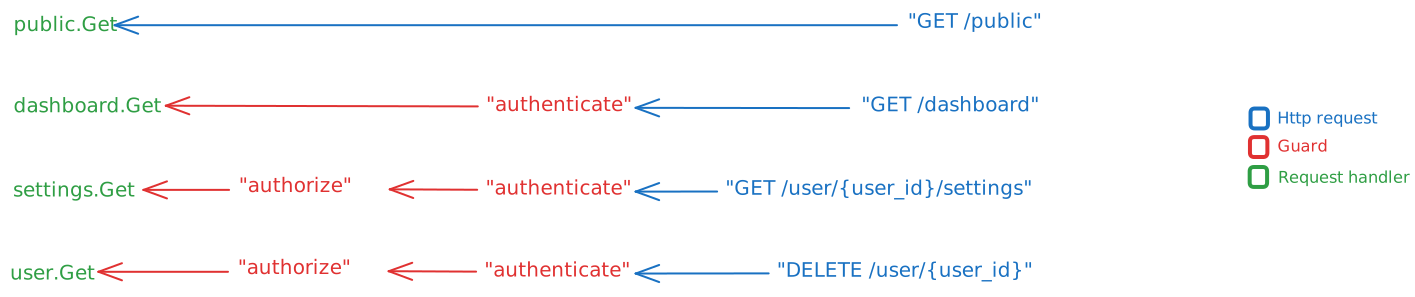
Guards
A guard is an object that is composed of an optional name and a required handler. You can add guards to your routes in order to protect them or modify their scope.
package main

import (
    "main/lib/core/guards"
    "main/lib/core/routes"
    "main/lib/core/scopes"
    "main/lib/routes/data"
    "net/http"
)

var _ = []routes.Route{
    {
        Pattern: "GET /api/xml/data",
        Handler: data.Get,
        Guards: []guards.Guard{
            {
                Name: "jsonless",
                Handler: func(_ scopes.Scope, request *http.Request, writer http.ResponseWriter, allow func()) {
                    if request.Header.Get("Content-Type") == "application/json" {
                        writer.WriteHeader(http.StatusBadRequest)
                        return
                    }
                    allow()
                },
            },
        },
    },
}In this example, the route GET /api/xml/data will decline requests with content type application/json

Composition
You can compose multiple guards in order to create more advanced restrictions. package main
import (
"main/lib/core/databases"
"main/lib/core/databases/schema"
"main/lib/core/guards"
"main/lib/core/negotiate"
"main/lib/core/routes"
"main/lib/core/scopes"
"main/lib/routes/dashboard"
"main/lib/routes/public"
"main/lib/routes/settings"
"main/lib/routes/users"
"net/http"
)
var _, queries, _ = databases.Connect()
var authenticate = guards.Guard{
Name: "authenticate",
Handler: func(scope scopes.Scope, request *http.Request, writer http.ResponseWriter, allow func()) {
sessionId, _ := negotiate.SessionId(writer, request)
session, _ := queries.FindSessionById(request.Context(), sessionId)
if session.ID == "" {
writer.WriteHeader(401)
writer.Write([]byte("not authenticated"))
return
}
scope["session"] = session
allow()
},
}
var authorize = guards.Guard{
Name: "authorize",
Handler: func(scope scopes.Scope, request *http.Request, writer http.ResponseWriter, allow func()) {
session, _ := scope["session"].(schema.Session)
if request.PathValue("user_id") != session.UserID {
writer.WriteHeader(403)
writer.Write([]byte("missing permissions"))
return
}
allow()
},
}
var server_routes = []routes.Route{
{Pattern: "GET /public", Handler: public.Get},
{Pattern: "GET /dashboard", Handler: dashboard.Get, Guards: []guards.Guard{authenticate}},
{Pattern: "GET /users/{user_id}/settings", Handler: settings.Get, Guards: []guards.Guard{authenticate, authorize}},
{Pattern: "DELETE /users/{user_id}", Handler: users.Delete, Guards: []guards.Guard{authenticate, authorize}},
}